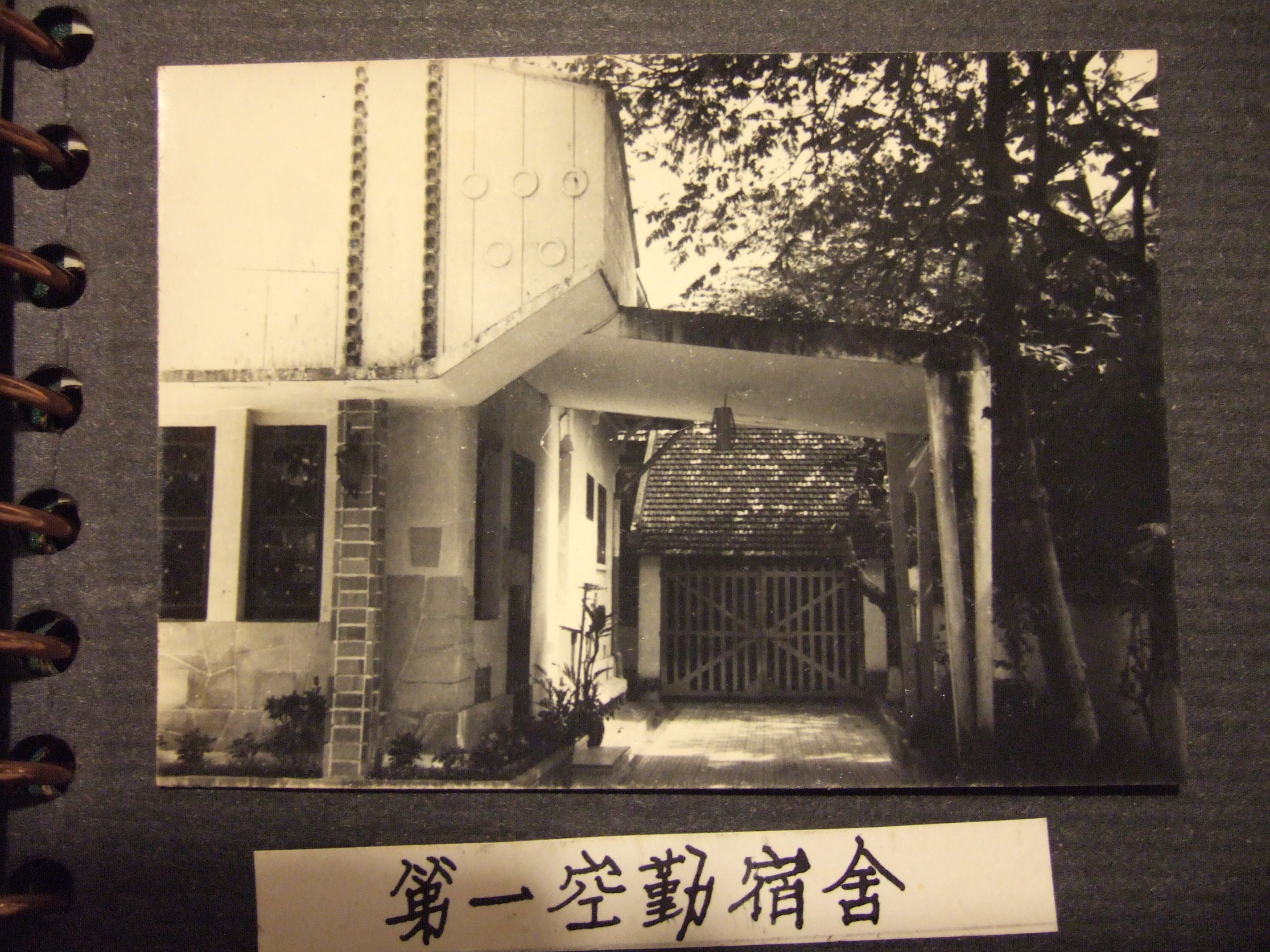
英國友人包柯克2009年10月8日參加Bob Kleyla葬禮時發表的悼詞。Bob從B-17的時代就參與34中隊的特種任務策劃工作,一直持續到奇龍計畫為止。我在2007年赴美受訓,透過包柯克的介紹見到了Bob。
BOB KLEYLA – An Author’s Appreciation
By Chris Pocock
author, 50 YEARS OF THE U-2 and THE BLACK BATS (forthcoming)
Some people never get the recognition that they deserve. This is particularly true of those who work in the secret world. They sign the oaths. They keep the secrets. Their daily toil in the service of their country may be recorded in some dusty archive. But the arbitrary and haphazard nature of the declassification process in some US government agencies, means that their deeds may never surface, to reach a wider audience.
I first met Bob Kleyla on the fringes of a conference on Early Cold War Overflights at the DIA in 2001. He began to tell me about his role in the planning of important reconnaissance missions over the Soviet Union from the end of the Korean War. The thought occurred to me – Bob should be up there on the podium, with all those pilots and analysts who got to speak at that event. Typically, though, this small, modest old man sat quietly at the back of the auditorium, listening to others recall their heroic Cold War stories.
I resolved to meet him again. I did not get that opportunity until early 2007, when I came to a cold and snowbound Washington DC to do research for a new book on the remarkable history of the Chinese Air Force 34th Squadron on Taiwan. We agreed to meet in the hotel room of my co-author, Clarence Fu, who was visiting from Taiwan. It quickly became apparent to me, that I needed more time to learn about Bob’s extensive and fascinating career. He graciously agreed to spend more time with me. I made no fewer than three visits to his Georgetown apartment that week. Our forthcoming book will be much the better, for the contribution that Bob Kleyla chose to make.
As you know, Bob saw service in World War Two in Europe as a bombardier on B-17s. The story of those brave young airmen who faced appalling odds in the daytime skies over Germany is so well known, that I need not dwell on it here. Evidently, though, the experience did not deter Bob from the life of a military aviator. Indeed, when the war was over he trained as a pilot, only to learn that the US Air Force had more pilots than it could handle.
So Bob retrained as a navigator, and in the arcane art of airborne electronic warfare. He joined the aircrews on the mighty B-36 strategic bomber, known colloquially as “The Aluminum Overcast”. According to my notes, he flew the RB-36 reconnaissance version. (Damn! Another untold spyplane story – I should have asked him some questions about that!)
In the headquarters of the Far East Air Force in Japan from 1953, Bob was part of the secret group that organized Project Westwind. He planned various overflights of North Korea and Soviet Asia by RF-86s, RF-100s, RB-45s and RB-57s. In so doing, he acquired all the ‘tickets’ – the Top Secret and Codeword clearances need to work on these very sensitive and carefully controlled missions. And that brought him to the attention of an even more secret team of airmen, who worked for the Central Intelligence Agency.
Bob told me that it was Willy Homen who recruited him into the covert world. Homen was another Air Force ECM officer, who had been seconded to the CIA. Homen was the project officer for a joint operation on Taiwan between the US and the Nationalist air force, that was overflying mainland China at night to collect electronic intelligence with an old, four-engine Privateer patrol plane. In 1956, this was replaced by a couple of B-17s. They came to Taiwan from the Agency’s depot in Japan, and so did Bob Kleyla, with his first wife, Lynne.
Bob Kleyla became Bob ‘White’ under cover, and remained with the Agency for the remainder of his career. He did two tours on Taiwan, where he was an operations officer and mission planner for The Black Bat Squadron. The CIA provided the aircraft, sensors, expertise and support for the joint operation. The nationalists provided the base, the maintenance and most importantly the brave aircrew who flew into China hundreds of times to collect ELINT, and drop agents and propaganda packages. You may be surprised to learn that the Black Bats made no fewer than 585 overflights of mainland China between 1953 and 1966. In so doing, they sacrificed over 100 aircrew in the loss of three B-17s, two B-26s and five RB-69s – a special version of the P2V Neptune maritime patrol plane.
In 1957, the US began providing support to the independence movement in Tibet. Bob trained exiled Polish airmen employed by the Agency to fly the B-17 that was used to airdrop guerillas and supplies to that remote country. In between his tours to Taiwan, Bob worked in air operations at Agency headquarters. He planned U-2 missions over the Soviet Union and other ‘denied territories’. He became the project officer for STPOLLY, the CIA codename for the low-level operations over China
Bob met his second wife, Helen, in Agency headquarters, and she accompanied him on the second tour to Taiwan. The Communist Chinese air defense system was reacting with vigor and ingenuity to the unwelcome nighttime incursions from Taiwan. Bob’s task of mission planning required meticulous attention to collateral intelligence, and a good sense of the limitations of both man and machine, in order to provide the safest penetration routes for those national aircrews.
During this period, Bob formally retired from the Air Force as a Lt Col and became a GS-14-level government employee. Back in Agency headquarters again, he was Deputy Chief of the Air Branch. He suggested arming the P2Vs flying over China with air-to-air missiles. He was involved in the development of a new aircraft for the China low-level mission – a ‘black’ conversion of the P-3 maritime patrol aircraft.
In 1968-9, Bob was project officer for one of the most audacious covert air missions ever conducted by the Air Branch. In order to gain technical intelligence on China’s nuclear weapons and missile developments, special sensors were combined onto two aircraft pallets. Now the task was to airdrop the camoflaged pallets onto the desert wastelands of Xinjiang province in the far northwest of China, close to the test sites. Undetected! The Agency turned once again to the Black Bat squadron on Taiwan. Bob helped to train the nationalist airmen to fly a C-130 at low level, and planned the 13-hour roundtrip from Thailand across the eastern Himalayas. The flight was a complete success.
Bob continued to work as an air operations officer in the CIA’s Special Operations Group until his retirement in 1980.
It was a pleasure and a privilege to talk with Bob about some of his activities as a covert air operator. Unlike many interviewees I have known, he did not exaggerate his own role, nor try to speculate on the details that his memory could not recall. During my last telephone conversation with him earlier this year, he quietly suggested that I should expedite my research. It was his way of telling me that he wouldn’t be able to contribute for much longer.
So long then, Bob. Our book will be published early next year. I’m truly sorry that you won’t be around to read it.